
On this page
Moving to a new home comes with a range of expenses, from hiring movers and arranging packing services to covering travel, storage, and cleaning costs. Some expenses are easy to anticipate, while others may not become apparent until moving day approaches. Knowing what to budget for can help you prepare for the costs associated with your relocation.
This guide provides a list of moving expenses to help you prepare your budget, explains how local and long-distance moving costs differ, and offers practical ways to manage your spending.
What Moving Expenses You Should Include in Your Budget
A moving budget should account for the services needed to transport your belongings, along with additional costs associated with packing, storage, travel, and preparing your new home.
Professional Moving Services
Transportation and labor usually account for a significant portion of a professional moving estimate. The amount you’ll pay depends on the company’s pricing method, the size of your shipment, the distance traveled, and the services included.
Your estimate may include loading, transportation, unloading, and delivery. Packing, unpacking, furniture disassembly and reassembly, or specialty handling may be priced separately, depending on the company and your agreement.
When reviewing a quote, check which services are included and which may cost extra. Two estimates may differ because they include different services, even when they cover the same shipment.
Packing and Unpacking
Professional packing can add to moving expenses, particularly if you have a large household, fragile belongings, artwork, antiques, or other items that require specialized handling.

The cost depends on the amount and type of belongings and the level of assistance included in your moving plan. Full packing typically covers a broader range of household items, while partial packing focuses on selected belongings.
Valuable or delicate belongings, such as fine art, antiques, and certain collectibles, may require specialized handling or custom crating, which can add to the moving budget.
Unpacking is another service to consider if you’d like help settling into your new home. Ask whether unpacking and furniture placement can be included in your moving plan.
Moving Insurance Coverage
Moving companies have to offer basic valuation coverage for belongings during transit, while additional protection options are available at an extra cost. You can also consider third-party moving insurance for broader coverage. Review the available options and their terms before your move.
Learn more about moving coverage options to understand the differences.
Storage
Storage may be necessary if your new home isn’t ready when your current lease ends, your closing date changes, or you need time to arrange your new space.
Consider how much space you need, how long you’ll need storage, and whether delivery to and pickup from the facility is included in the quoted price.
White Glove Moving & Storage offers short- and long-term storage, including one month of complimentary storage for residential clients. If you need storage for longer, ask about extended options and associated costs.
Building Access and Logistical Requirements
Apartment buildings and residential communities may require a Certificate of Insurance (COI), advance elevator reservations, designated loading times, or building fees and deposits. Parking arrangements may also involve additional costs. Requirements and responsibilities vary by building and moving company, so confirm what documentation is needed, which arrangements you must make yourself, and what assistance your mover can provide.
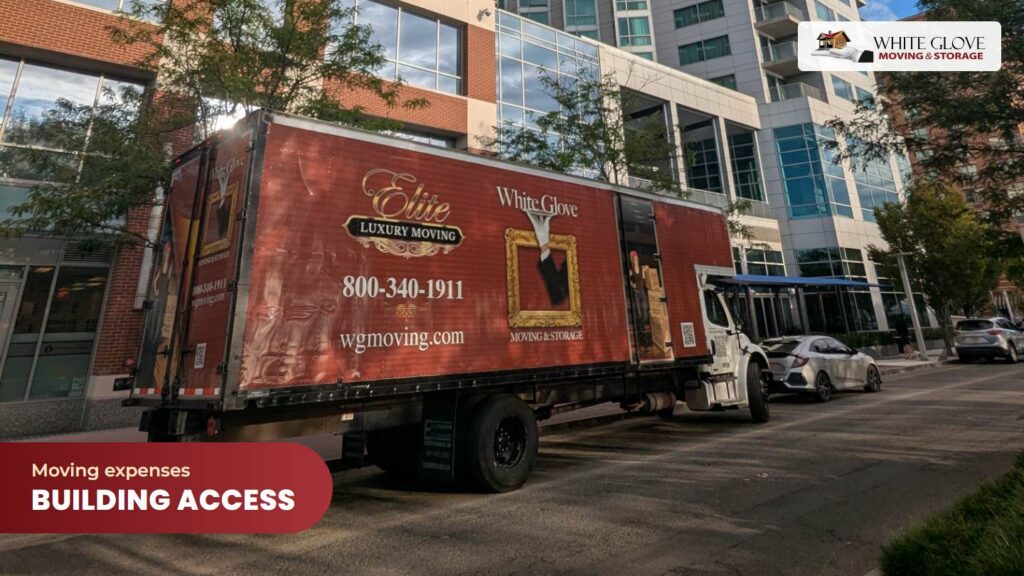
Limited truck access, long carrying distances, stair carries, or specialized hoisting may affect the labor or equipment needed for a move. Discuss any access limitations with your moving company in advance so potential additional costs can be considered in your estimate.
Travel and Temporary Accommodation
Long-distance relocations can involve travel costs separate from transporting your belongings. Depending on your arrangements, you may need to pay for fuel, tolls, airfare, rental vehicles, or overnight accommodation.
You may also need temporary accommodation if you cannot move into your new home immediately. Include these expenses in your budget so you can account for the full cost of the relocation.
How Local and Long-Distance Moving Costs Differ
Local and long-distance moves can involve different pricing structures. Understanding how your moving company calculates its estimate, and whether the quoted price is binding or non-binding, helps you assess the quote and identify which details could affect the final cost.
Binding vs. Non-Binding Moving Estimates
A binding estimate is a fixed price for the inventory and services listed on it. If the list doesn’t change, you pay the price you were quoted. A non-binding estimate is the mover’s projection, and the final bill depends on the actual weight, volume, or time. For interstate moves, federal rules generally limit the amount a mover can require at delivery under a non-binding estimate to 110% of the estimate. Any remaining balance is billed afterward, subject to applicable exceptions.
Local Moving Expenses
Local moving costs often depend on the time required to complete the job and the conditions at both properties. For hourly-rated moves, movers may provide non-binding estimates, with the final charge based on the actual hours worked.

Stairs, elevator access, parking, and the distance between the truck and the entrance can affect the work involved. A company’s minimum service requirements may also influence the price of a smaller move.
White Glove Moving & Storage uses hourly pricing for local moves. Our estimates are based on a detailed inventory of your belongings and the expected time needed to complete the move. A minimum service duration may apply.
When requesting an estimate, provide accurate information about your belongings and both properties. Ask how the price is calculated, whether a minimum charge applies, and which services are included.
Long-Distance Moving Expenses
Companies use different pricing methods for long-distance moves. Many movers calculate transportation charges based on shipment weight and distance, along with additional services. Others use volume-based estimates or offer flat rates based on the agreed scope of the move.

White Glove Moving & Storage offers binding, flat-rate estimates for long-distance moves. The rate is based on a detailed inventory of the items being moved and the destination. Once agreed upon, the quoted price remains fixed for the listed inventory and services.
If you add or remove items or request additional services, the price may need to be adjusted. Before booking, review the inventory and confirm the services included in your estimate, along with the pickup and delivery arrangements and any circumstances that could affect the agreed price.
What Factors Affect Your Total Moving Expenses?
Several factors come into play when calculating moving expenses. Some affect the amount of labor and transportation required, while others depend on your schedule and the services you choose.
- Shipment size and contents: A larger shipment generally requires more space and resources to transport. Bulky furniture and specialty items may also require additional handling.
- Services requested: Packing, unpacking, furniture assembly, specialty handling, and storage can add to the cost.
- Property access: Stairs, long carrying distances, elevator restrictions, and limited truck access can affect the time and labor required.
- Moving dates: Demand and availability vary throughout the year. Summer and the end of the month are often busy periods for movers, which can limit scheduling options and may affect pricing.
- Changes to your plans: Adding belongings, changing the destination, extending storage, or requesting additional services can affect the final cost.
Discuss these factors with your moving company before confirming your booking. Providing accurate information about your move helps the estimator account for your requirements and identify potential additional charges.
How to Reduce Your Moving Expenses
Although not every relocation expense can be avoided, a few practical decisions can help you manage your moving budget.
Declutter Before Your Move
Moving is a practical opportunity to sort through belongings you no longer need. Consider selling, donating, recycling, or disposing of items before preparing your inventory.
A smaller shipment may require less transportation space and reduce packing and handling requirements. This can be particularly relevant when your estimate is based on shipment volume or inventory. Start sorting early so you have enough time to decide what you want to take to your new home.
Be Flexible With Your Moving Dates
If your schedule allows, ask your moving company about dates outside its busiest periods. Summer and the end of the month can be particularly popular, so alternative dates may offer more scheduling options and potentially a better price.
Rates and availability vary by company, route, and time of year. Rather than assuming that a particular month or weekday will always be cheaper, ask whether changing your preferred dates could affect your estimate.
Ask About Available Discounts
Moving companies may offer discounts or promotions at certain times of the year, so it’s worth checking what is available before booking. White Glove Moving & Storage occasionally offers special promotions for moving services. Check the company’s website and social media channels for current offers and eligibility requirements.
If a promotion applies to your move, confirm its terms and how it affects your written estimate before booking.
Other Relocation Expenses to Plan For
The moving company’s estimate is only one part of your overall budget. You may also need to cover costs related to leaving your current property, preparing your new home, and managing your household during the transition.
Cleaning, Painting, and Repairs
You may need to clean your previous home after removing your belongings, particularly if your lease requires it or you’re preparing the space for its next occupants. The cost depends on its condition and whether you hire a cleaning service.

Repairs or redecoration may also be necessary if walls, floors, or fixtures need attention. Renters should review their lease and document the condition of the home before moving out. Homeowners preparing to sell may choose to complete repairs or touch-ups.
Childcare and Pet Care
Depending on your circumstances, you may need childcare while movers are working or temporary boarding for a pet.
For longer relocations, consider how your pet will travel and whether specialized transportation is necessary. Air travel, destination requirements, and your pet’s individual needs may affect the arrangements and associated costs.
Furniture Removal and Disposal
If you’re downsizing or leaving furniture and other belongings behind, you may need to arrange junk removal, recycling, donation pickup, or disposal. Check which items each service accepts and whether collection involves separate charges.
Utility Connections and Housing Deposits
Setting up your new home may involve connection fees or deposits for electricity, water, gas, and internet. Charges depend on your location and provider.
Renters may also need to pay a security deposit and initial rent. Homebuyers should account for housing-related expenses such as insurance premiums and property costs due at closing.
Planning a Budget for Your Relocation
Once you understand the main moving costs and additional expenses, bring them together in a budget. A simple plan can help you keep track of expected costs and manage your spending throughout the relocation.
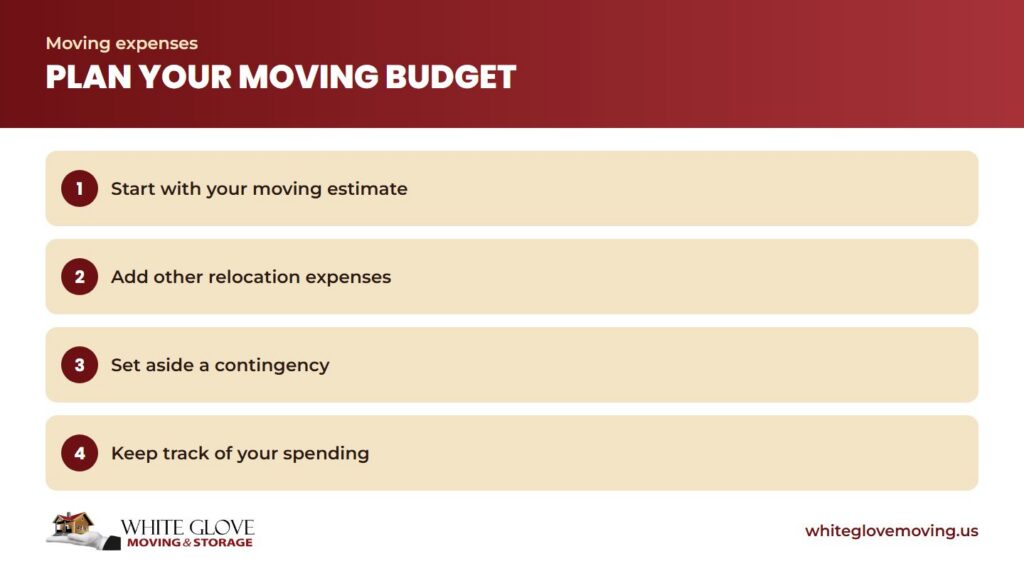
Start With Your Moving Estimate
Obtain a written estimate of your moving expenses from moving companies and review what’s included in each quote. Pay attention to the pricing method, services, inventory, and any potential additional charges. If you’re comparing estimates, make sure they cover a similar scope of work.
Use your chosen estimate as the starting point when you calculate moving expenses and build your overall relocation budget.
Add Other Relocation Expenses
Include costs that you’ll pay separately from the moving company, such as travel, temporary accommodation, cleaning, utility connections, and pet care. Check that you haven’t counted any services twice if they’re already included in your moving estimate.
Set Aside a Contingency
Some expenses may change or arise unexpectedly as your moving date approaches. Consider setting aside an additional amount based on your financial circumstances and the uncertainty in your plans.
Keep Track of Your Spending
Keep your moving estimate, service agreements, receipts, and payment records together. A simple spreadsheet can list the estimated cost, actual cost, payment status, and notes for each expense.
Update the figures as you book services and pay bills. This will help you see how your spending compares with your original budget and identify costs that still need to be covered.
There are also apps designed to help you plan and organize your move. Explore our guide to the best free moving apps for options that can help you manage different aspects of your move.
Frequently Asked Questions About Moving Expenses
What Is the Difference Between a Binding and a Non-Binding Moving Estimate?
A binding estimate sets the price for the inventory and services listed in the agreement, provided the scope of the move remains unchanged. A non-binding estimate is an initial cost projection, and the final charge may differ depending on the actual shipment and applicable charges. For interstate moves, federal rules generally limit the amount a mover can collect at delivery under a non-binding estimate to 110% of the estimate, with any remaining balance billed afterward. White Glove Moving & Storage offers binding, flat-rate estimates for long-distance moves. For more information, see the FMCSA guide Your Rights and Responsibilities When You Move.
How Is the Final Price of a Local Move Calculated?
Local moves are priced by the hour. Your estimate shows the expected time, based on your inventory and the access at both homes, and the final charge reflects the actual time the crew works. Accurate details about stairs, elevators, parking, and your belongings help keep the estimate close to the final cost.
Why Is There a Minimum Charge for a Move?
Every move needs a truck and a trained crew, plus the time to drive to your home and back again. Those costs apply whether the crew moves a few pieces of furniture or a full apartment, so every move carries a minimum charge. The minimum with White Glove Moving & Storage covers a small move, about the furniture and belongings of a studio apartment. If your move is smaller than that, the minimum charge still applies.
Can You Deduct Moving Expenses From Your Taxes?
Most people cannot deduct moving expenses on their U.S. federal tax returns. However, there are some exceptions. Active-duty members of the U.S. Armed Forces may qualify if they move because of military orders and a permanent change of station. Certain intelligence community employees and new appointees may also qualify when relocating in 2026 or later because of a qualifying change in assignment. Eligibility rules apply. See the IRS guidance on moving expenses for details.
Is Employer-Paid Moving Assistance Taxable?
In most cases, yes. If your employer pays for your move or reimburses your moving expenses, the amount is generally treated as taxable income. Exceptions apply to qualifying military relocations and certain eligible intelligence community moves. If you receive relocation assistance, ask your employer how it will be reported for tax purposes. You can also consult the IRS Employer’s Tax Guide to Fringe Benefits.
Can an Employer Reimburse Moving Expenses?
Yes. Employers can help cover relocation costs by paying service providers directly, reimbursing employees, or providing a moving allowance. The expenses covered depend on the employer’s policy or relocation agreement. Before accepting the offer, check which costs are eligible, whether you must use approved providers, and whether you may have to repay the assistance if you leave the company.
Should I Keep Receipts for Moving Expenses?
Yes. Keep your moving estimates, invoices, receipts, payment confirmations, and any paperwork related to employer relocation assistance. These records help you track your spending, check charges, and request reimbursement when applicable. They can also be useful for your financial and tax records.
Should I Tip Professional Movers?
Tipping professional movers is generally discretionary, and there is no single amount that applies to every move. If you choose to tip, consider the length and complexity of the job, the size of the crew, and the quality of the service. You can also ask the moving company whether it has any guidance on tipping its crews.
What Information Should I Provide to Get an Accurate Moving Estimate?
Provide your moving company with your origin and destination, preferred moving date, and an inventory of the belongings you plan to move. Mention any packing, storage, furniture, or specialty handling requirements, along with relevant property access details. This information helps the company assess your needs and prepare an estimate.
Does White Glove Moving & Storage Offer In-Home and Virtual Estimates?
Yes. White Glove Moving & Storage offers both in-home and virtual moving estimates. You can discuss your relocation needs and have your shipment assessed using the option that best suits your circumstances.
Plan Your Move With a Clear Budget
A realistic moving budget goes beyond the cost of transporting your belongings. Storage, travel, temporary accommodation, utility connections, and other expenses can all affect your total relocation costs.
Before finalizing your plans, review your expected expenses, confirm what’s included in your moving estimate, and set aside a reserve for unexpected costs. Keeping track of these details will help you understand your financial commitments and make informed decisions throughout the move.
Ready to plan your relocation? Contact White Glove Moving & Storage to request your free estimate and get a clearer picture of your moving costs.
